

Author: admin

  • The American Boxwood Society

    The American Boxwood Society

    The American Boxwood Society

    In the late 1950s and early 1960s many gardens in Northern Virginia which contained large, billowing old plants of Buxus sempervirens ‘Suffruticosa’, were losing these beautiful specimens and hedges to an unidentified problem.

    Portions of the plants would slowly turn straw-coloured and then die, soon followed by the total loss of colour and life of the entire plant. Concern about this decline of old and long-established plants brought together a group of amateur and professional boxwood hedge enthusiasts who contacted friends and colleagues to attend an organizing meeting in May 1961, out of which grew The American Boxwood Society. One hundred charter members became the active nucleus of the new association. The headquarters were established at the University of Virginia’s Orland E. White Arboretum, located at Blandy Farm in the beautiful Shenandoah Valley of Virginia. The Arboretum has since become the State Arboretum of Virginia. A Constitution for the Society was adopted in 1962 and non-profit status with tax exemption was enacted in 1968.

    In America, for some strange reason, American Boxwood‚ and English Boxwood‚ have become the commonly-used names for Buxus sempervirens and Buxus sempervirens ‘Suffruticosa’, respectively, by both gardeners and nurserymen. The progressive dying off of old plants seemed to affect ONLY Suffruticosa, and therefore the problem or disease became known as English Boxwood Decline. It was the urgent need to identify the cause of this widespread disaster that gave the new Boxwood Society its impetus. The Society’s mission was defined as education in the fields of boxwood history, care and culture. One of the early projects was the financial support of graduate study at Virginia Tech into the causes and possible cures for the English Boxwood Decline. As part of its educational mission, in 1961 the Society began to publish a quarterly journal, The Boxwood Bulletin. An Advisory Board was appointed with many distinguished botanists and scientists, men and women who contributed greatly to the breadth and interest of information to be shared with Society members. An Editor was named for The Bulletin and it continues to provide scientific and cultural information for boxwood growers. In later years the ABS was chosen to be the International Registration Authority for Buxus by the International Society for Horticultural Sciences. Publications printed by the Society also include four editions of the Boxwood Buyer’s Guide, listing nurseries that grow or market boxes. The first authoritative book covering all phases of boxwood information, history, care, pests and diseases, The Boxwood Handbook, appeared in 1995, followed by a revised edition in 1998. A Manual of Boxwood is now in preparation. All of these publications are the result of the dedicated efforts of Mr Lynn R. Batdorf, Curator of Buxus at the U.S. National Arboretum in Washington, DC.

    Another excellent publication that has helped boxwood growers worldwide is the book, Boxwood Its History, Cultivation. Propagation and Descriptions by P.D. Larson which was printed in 1996. Beginning in 1977, the Society undertook two new types of activities, the organizing of boxwood workshops in different areas of Virginia and planning boxwood tours. These programmes proved extremely popular and have been effective ways to spread knowledge about boxwood care and offer attractive locations where boxwood can be seen. The formation of two other groups devoted to the study of boxwood has demonstrated the continuing and lasting interest in this outstanding plant: The Boxwood Society of the Midwest, formed in St.Louis, Missouri, in 1977 and your own European Boxwood and Topiary Society, with its very broad representation, both geographically and horticulturally. After the passage of the many centuries when boxwood has flourished and has been admired, it is reassuring to realize that its fascination continues to draw new gardeners and to add its distinctive presence to their surroundings.

    Our Society has a very active research committee, chaired by Dr Henry Frierson, with major funding generated by a plant auction held at the annual meeting. Donated plant material netted the Society more than $3,500 at the auction held last month in Richmond, Virginia. The garden tours held on the final day of the conference still rank as one of the highlights for all attendees. Undoubtedly, the society’s success has been due to the unselfish work of individuals such as Decca Frackelton and Joan Butler, both of whom were recognized at our recent annual meeting.

    This article is an extract from a lecture given at the 1999 British AGM by Tom Saunders, President of the American Boxwood Society.
    In America, for some strange reason, American Boxwood‚
    and English Boxwood‚ have become the commonly-used names for Buxus sempervirens and Buxus sempervirens ‘Suffruticosa’, respectively.

    Click here to visit the United States Site www.boxwoodsociety.org
  • 3D Printing in Manufacturing

    3D Printing in Manufacturing

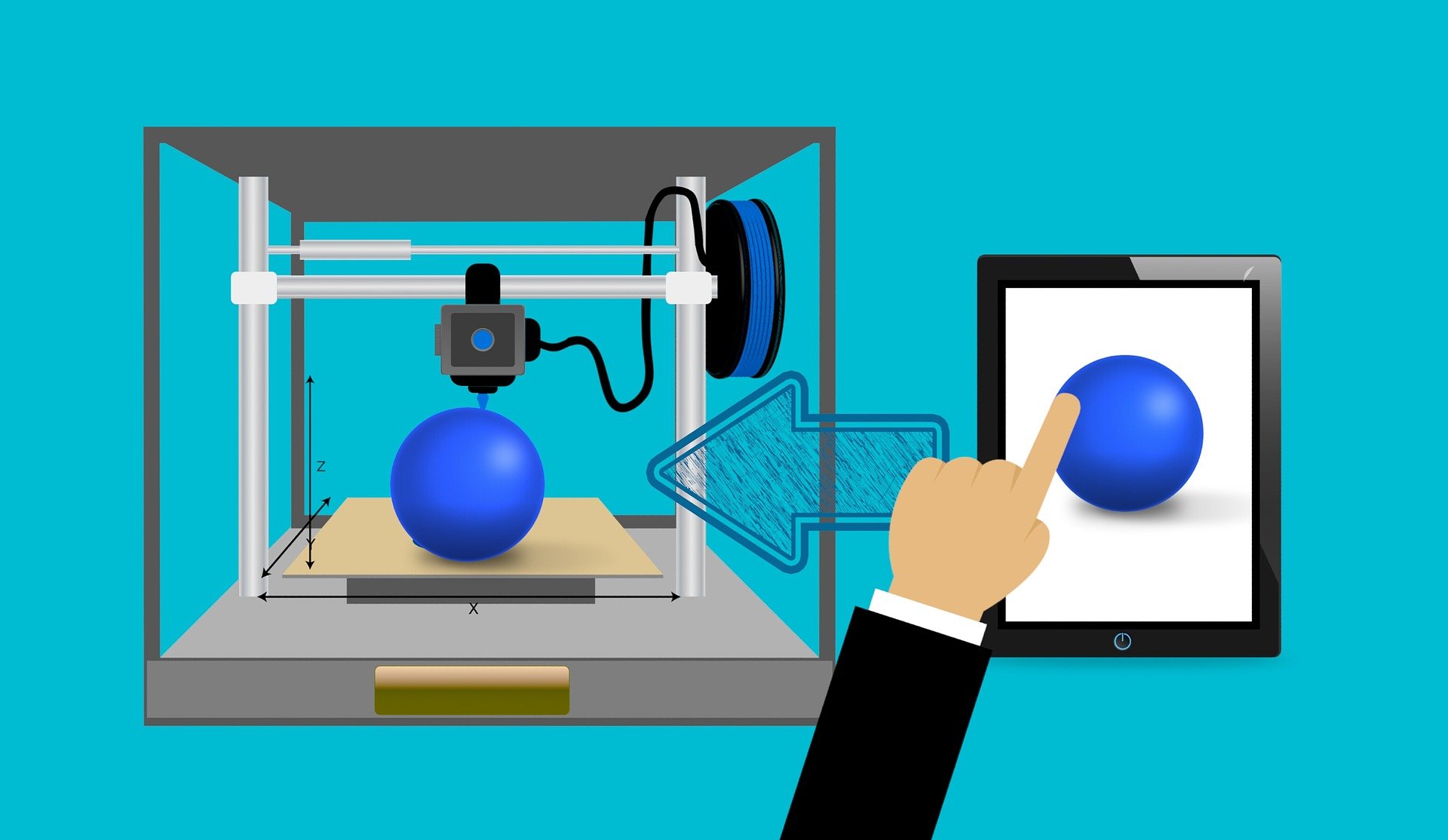
    With the advent of consumer-grade 3D printers at lower price points, this technology – which has been around since the 1980s – has recently made its debut in the home office.

    But 3D printers aren’t just making an impact at the consumer level. Instead, they’re slowly changing the way manufacturers think about design, prototyping, and even production.

    As the technology continues to improve, 3D printers can produce more and more parts at a higher return on investment (ROI) than conventional manufacturing techniques. Could we be looking at a whole new mode of production just over the horizon?

    3D printing has grown into a $6.063 billion industry and boasts a footprint in a wide span of industries. In 2016, the “additive manufacturing” industry, as it is known, grew 17.4 percent in worldwide revenues. Last year, nearly 500,000 printers shipped, but that’s nothing compared to the estimated 6.7 million that will ship in 2020.

    Companies like Formlabs and Stratasys are experimenting with ways to scale up 3D printing production to make it more competitive with conventional manufacturing methods in terms of ROI. As the production volume capabilities of these printers increase and processes are automated – an essential component of all facets in manufacturing today – the total cost of production is cut dramatically. The result is a more cost-effective product that is created more quickly and with less human intervention.

    “[The] 3D printing industry has proven to have significant implications for such industries as automotive, machinery, aviation and more, and the applications will continue to grow as these industries show the technology’s efficiency and effectiveness in production,” John Kawola, president of Ultimaker North America, told Business News Daily. “But 3D printing is part of something bigger: the realization of the next manufacturing revolution – Industry 4.0.”

    Industry 4.0, also called Manufacturing 4.0, refers to the nexus of technology in the modern manufacturing space. The vision often includes the internet of things (IoT), machine learning, mixed reality, and robotics, and 3D printing is an integral part of that vision.

    3D printing already plays several roles in the manufacturing process, and it is poised to make further gains as it is refined and perfected. Currently, design and rapid prototyping are two of the main processes that benefit from 3D prints. 3D printers are also useful in low-volume production, such as when small amounts of products are needed to test the market or advertise at trade shows. And as time goes on, 3D printers’ production capabilities continue to scale.

    In every facet of the manufacturing, 3D printers can reduce the time and cost required to achieve a viable product. That is why Jack Beuth, a professor in the Department of Mechanical Engineering at Carnegie Mellon University’s College of Engineering and co-director of the NextManufacturing Center, believes 3D printing should be considered a brand-new technology on the level of personal computing or smartphones.

    “Companies are now trying to exploit the technology to become more profitable, and how they do it will involve innovations that are much more than just replacements for traditional manufacturing,” Beuth said. “With additive manufacturing, we are about where personal computing was in 1983.”

    Because 3D printers are a more flexible technology, design teams can experiment with structures that are stronger or more interesting, and create complex geometric shapes that previous methods were incapable of realizing.

    “The design goals we encourage customers to think about to really unlock the value of 3D printing are lightweight, creating lattice-type structures to reduce the material used; combining assemblies, to reduce labor and assembly steps and the potential points of failure; and the soft costs too, like reducing quality assurance and inventory managed,” said Greg Thompson, global product manager for 3D printing at Proto Labs.

    Proto Labs enables engineers to upload their own digital CAD files, and the company turns around prototypes or low-volume runs of the product in 15 days or less.

    “Once we have the file, our software incorporates visualization tools and provides a design for manufacturability analysis,” Thompson said. “Then all of that is pushed down to our shop floor, as well as back to the customer with a quote.”

    Depending on the nature of the product, Proto Labs supports 3D printing, injection molding, and CNC manufacturing. Its process allows the client to engage with the creation of their design from start to finish. If anything needs adjusting, from lead time for production to the number of materials used for the design, the client will be able to respond prior to production.

    “That digital thread is critical because if we had different islands at different steps, we could not deliver the lead times we deliver,” Thompson said.

    3D printers have also greatly reduced the time it takes to create a working prototype of a product. Cheaper, quicker prototype creation speeds up product development, reducing costs across the board and hastening the total time to market.

    “3D printing is used extensively for prototyping in product development today to accelerate design cycles and enable designers to efficiently explore multiple options,” said Dr. Paul Benning, HP fellow, and 3D print chief technologist at HP Inc. “Typically, these designs were manufactured in analog processes like injection molding, but in the future, parts will be manufactured using 3D print.”

    Using 3D printing, several iterations of various designs can easily be created to test and gather feedback, allowing companies to determine early on which is the best model. In the past, this sort of practice would be costly and likely untenable even for the most profitable companies. Today, it is within arm’s length for nearly everyone.

    “For the last 25 years, the paradigm for advanced product development has been to do extensive simulation and design iteration before creating first functional prototypes to test,” Beuth said. “Now that is changing; once you have a workable design, you can print a prototype and test it at a minimal cost. This will substantially reduce product development times.”

    While 3D printers currently beat conventional methods for the first several thousand parts produced, that number is steadily rising, painting the picture of a 3D printed manufacturing future.

    “In the future, it is possible that all short-run part production will use 3D print,” Benning said. “Focused product teams [will be] able to launch new products on a weekly or daily basis – only constrained by their time and imagination, no longer constrained by the capital assets needed for analog production. This agile development process for physical parts, enabled by 3D print, has the potential to radically improve and accelerate the products we will see and use in the not-too-distant future.”

    Dagoma 3D is working on making that a reality. Scaling up production of its 3D printers, which are partially 3D printed themselves, has enabled it to produce 50 to 70 printers per day. The company now boasts three facilities – two in France and one in the U.S. – with a fleet of about 850 3D printers in total. This year, the company expects to ship 15,000 printers.

    “3D printing our printers is … faster and … cheaper for the customer,” said Matt Regnier, CEO of Dagoma 3D. “3D printing helps us to grow faster, and it helps us to reduce the cost and reduce the price.”

    As time goes on, the number of parts 3D printers can take on while boasting a greater ROI than conventional methods like injection molding continues to grow, Regnier said. Moreover, a production line based on 3D printing technology is easier to tweak.

    “I think one of the main advantages … is to be able to adjust and adapt the whole production line with the speed of the 3D printing production lines,” Regnier said. “For example, if we want to improve something on our machine, it’s easy – it’s just one click away. For another technology like injection, it’s not one click away; it’s two to three months away. You’d have to change molds, ship it, make sure it’s ready and working, and then start producing.”

    According to Thompson, it’s unlikely that 3D printing will supplant traditional manufacturing, but for projects that make sense, it seems inevitable that 3D printing’s capabilities will continue to grow in terms of volume.

    “The 3D printing industry is tackling making machine efficiency higher and keeping the cost of materials down,” Thompson said. “As the industry continues to tackle those challenges, we’ll see more projects that make sense for 3D printing at higher quantities, but I think it will be an evolution towards that.”

  • Removing Bullying from America’s Classrooms: Deconstructing the Factors Underlying Student Bullying

    Removing Bullying from America’s Classrooms: Deconstructing the Factors Underlying Student Bullying

    Removing Bullying from America’s Classrooms: Deconstructing the Factors Underlying Student Bullying

    Given the growing recognition of bullying as a complex phenomenon with numerous far-reaching adverse implications, there are growing calls for interventions to target the multiplicity of factors. One framework for understanding bullying is the social-ecological framework, which sees bullying as a unique and intricate form of interpersonal aggression, which manifests in different patterns. In other words, bullying is not merely a dyadic problem between the one bullied and the bully, but rather, an occurrence with group characteristics. Bullying occurs in a social context, where various factors interact to promote, suppress, or maintain such behavior. As such, the current article uses the social-ecological framework to explore the factors underlying bullying behavior. The social-ecological theory views human development as a bidirectional interaction between human beings and the various systems in which they operate. As such, bullying is not just the outcome of individual characteristics but is also influenced by relationships with families, peers, families, teachers, neighbors, and societal influences.

    In line with the social-ecological theory, individual factors underlying bullying perpetration include callous-unemotional traits, antisocial personality traits, susceptibility to peer influence, endorsement of masculine traits, and psychotic tendencies. On the other hand, victimization is linked to poor school adjustment and poor physical health. Victimization is also linked to externalizing and internalizing challenges such as withdrawal, loneliness, anxiety, depression and social avoidance. However, the causal nature of these individual factors is unclear, especially given the complex nature of social and institutional influences.

    Family and peer factors also influence bullying. For instance, past research has shown that the poor parental supervision, the involvement of family members in gangs, parental conflict, lack of emotional support, and domestic violence all play a part in bullying. Regarding peer influence, children and youths spend much time interacting with peers in communities, neighborhoods, and schools, and research shows that bullying almost always occurs within peer contexts. Peer norms that support bullying and high incidence of peer conflict is a major factor. The role of bystanders also warrants some attention as they can either encourage or discourage bullying.

    The school environment also has a role in the frequency of bullying. Inappropriate teacher responses and lack of teacher support can support bullying. Other factors in the school environment include poor teacher-student relationships and lack of engagement in extracurricular school activities. Students are also less likely to report bullying incidences if they view the school climate as negative, or if they need excessive essay help and cannot cope with day-to-day schooling life.

    In conclusion, bullying does not occur in a vacuum. Rather, bullying arises from a complex interaction of proximal and distal factors at the individual and environmental context. As such, to mitigate bullying, various systems must be targeted to ensure that bullying intervention and prevention is effective. The factors outlined in this article offer a roadmap for prevention and intervention efforts. The goal of such programs must be the creation of a culture in which all students learn positive behaviors and become part of the solution. Prevention and intervention programs must collaborate with parents and address the school environment, besides offering individualized assistance to victims to deliver an environment that does not tolerate bullying.

    Anti-Bullying Resources for Educators & Parents

    American Academy of Child and Adolescent Psychiatry
    Bully Bust
    Committee for Children
    Edutopia
    National Association of Elementary School Principals 
    National Association of School Psychologists
    National Education Association
    National Runaway Safeline External link
    PACER’S National Bullying Prevention Center
    SafeKids.com
    School Bus Bullying Prevention
    Stomp Out Bullying External link
    Stop Bullying 
    Teaching Tolerance 
    The American Federation of Teachers
    The Bully Project 


  • Naw Ruz


    The Bahai New Year is called Naw Ruz. Naw Ruz is one of the nine Holy days of Bahai community. The event takes place in the VernalEquinox, on 21st March. It also marks the on set of Spring and the beginning of the Iranian year. The celebration of Naw Ruz also indicates spiritual growth and regeneration.

    Presently, the Bahais are a popular independent religion across the world. They believe in one God, who has sent His message to people through His Messengers in different times. These Messengers include Buddha, Zoroaster, Moses, Christ and Mohammed. Baha’is belive that the Messengers for this time are the Bab and Baha’u’llah, who have brought the essential message of unity of mankind.

    The origin of Naw Ruz is quite interesting. According to the Badi calendar, it is �Yamaullah� or the Day of God. Naw Ruz is also called Bab or the Day Of Point. It is also significant, for its association with the promised Messenger of Bab, whom God will make manifest.

    The Festivities of Naw Ruz

    Bahais go through nineteen day fast before Naw Ruz. On the bright morning of the Naw Ruz they break their fast.

    The nineteen-day fasting is broken with a huge feasting. Baha’is all over the world celebrate Naw Ruz according to local customs. Iranian Baha’is usually celebrate with the customs of Persian New Year such as the Seven S’s and symbolic decorations used in Norouz, while in Western countries, they usually celebrate with a potluck dinner.

    On the day of Naw Ruz people do not go to work. They pray and celebrate for the whole day. The Naw Ruz festivities are full of pomp and pageantry and it culminates with a grand dinner. There is a lot of music and dancing on Naw Ruz as both of these are seen as encouraged arts in the Baha’i Fath. It is also a season of sharing greetings and gift.